3D Christmas Copy Space Background: A Practical Asset for Seasonal Visual Projects
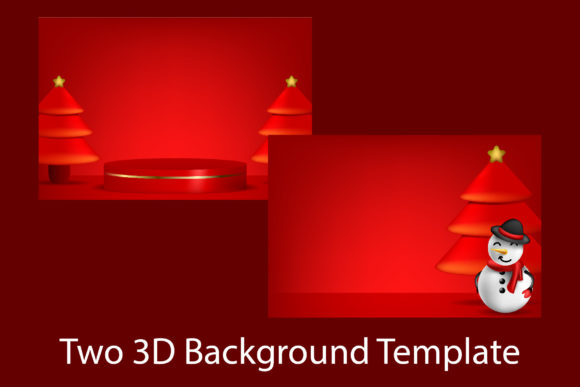
A 3D Christmas copy space background is a professionally rendered digital image or scene—typically in high-resolution PNG or JPEG format—that features festive, three-dimensional holiday elements (like pine garlands, glowing ornaments, frosted evergreen branches, or softly lit gift boxes) arranged to leave ample open area for text, logos, or product placement. Unlike flat vector illustrations or generic stock photos, it uses lighting, depth, texture, and perspective to create visual realism while preserving functional utility. Its core purpose isn’t decoration alone—it’s communication infrastructure: a ready-made visual foundation that supports clear, on-brand messaging during the holiday season.
What Sets It Apart From Standard Holiday Backgrounds
Most seasonal backgrounds fall into two categories: illustrative (stylized, often 2D, with limited depth cues) or documentary (photos of real setups, which may include clutter, inconsistent lighting, or unwanted objects). A well-executed 3D Christmas copy space background bridges that gap. It offers controlled photorealism—consistent shadows, accurate material rendering (e.g., matte paper vs. glossy ribbon), and predictable light falloff—without the logistical constraints of physical staging. Because it’s generated digitally, every element can be precisely positioned, scaled, and lit to serve compositional needs—not just aesthetic ones.
This level of control translates directly into production efficiency. For example, a small business owner designing a Black Friday email banner can drop headline text into the copy space without worrying about contrast issues or cropping out key elements. A freelance social media manager preparing Instagram carousel slides can maintain uniform spacing and hierarchy across multiple posts—something harder to achieve with varied real-world photos.
Key Characteristics That Influence Real-World Use
Not all 3D Christmas copy space backgrounds deliver equal value. The most effective versions share several traits:
- Intentional negative space: The “copy space” isn’t just empty—it’s visually anchored. Light gradients, subtle depth-of-field blur, or gentle directional lighting guide the eye toward the open zone without making it feel like a void.
- Seasonally versatile styling: Rather than leaning too heavily into overt religious iconography or hyper-specific regional traditions (e.g., only Nordic motifs), top-tier versions use broadly resonant elements—warm wood tones, natural greenery, soft gold accents—that align with mainstream commercial holiday aesthetics.
- Resolution and scalability: Delivered at minimum 3000×2000 pixels (or higher), with clean alpha channels if provided as PNGs. This ensures sharpness across digital ads, printed brochures, and large-format displays without pixelation or aliasing.
- Consistent color temperature: Lighting avoids extreme cool or warm casts unless intentionally designed for mood. Most reliable versions sit around 5000–5500K, matching typical indoor display environments and minimizing post-production color correction.
In practice, these characteristics reduce friction. A marketer running A/B tests on landing page headers doesn’t need to adjust brightness or add drop shadows manually—those are already baked in. An educator creating printable holiday lesson materials gets consistent tone and readability across worksheets, slides, and handouts.
Who Benefits—and Where It Fits Workflow
Professionals who regularly produce time-bound, audience-facing visual content see the strongest ROI. That includes:
- Small business owners launching seasonal promotions: Using a 3D Christmas copy space background streamlines creation of Facebook ads, Google Display banners, and in-store signage—all from one consistent base asset.
- Freelance designers and marketers managing multiple clients: Keeping a library of themed copy space backgrounds (including this one) allows rapid customization without starting from scratch each time.
- Educators and nonprofit communicators developing holiday-themed outreach: The balance of warmth and clarity supports accessibility—text remains legible against textured but non-distracting backdrops.
- Bloggers and content creators producing seasonal roundups or gift guides: A cohesive background unifies featured products across images, reinforcing brand identity even in affiliate-driven posts.
It’s less suited for projects requiring heavy animation, interactive 3D manipulation, or ultra-niche cultural specificity. If your campaign centers on handmade felt ornaments from a particular region—or requires rotating 3D models embedded in web pages—this static background won’t replace custom development. But for static or lightly animated deliverables (GIFs, MP4s with simple text overlays), it performs reliably.
Practical Considerations and Limitations
Quality varies significantly across sources. Some low-cost or AI-generated versions suffer from inconsistent lighting (e.g., highlights that don’t match the implied light source), unnatural material rendering (plastic-looking wood grain, overly uniform snow texture), or poorly defined copy zones (space that feels cramped or awkwardly shaped). Always preview at actual usage size—not just thumbnail—and test text legibility with your intended font and weight.
Also consider licensing. Many reputable providers offer extended licenses for commercial redistribution (e.g., including the background in a template sold on Creative Market), but standard licenses may prohibit use in client work unless explicitly permitted. Check terms before integrating into deliverables for third parties.
Finally, think about longevity. While designed for December campaigns, a well-styled 3D Christmas copy space background often works for late-November previews and early-January post-holiday messaging—especially if it avoids dated trends (e.g., specific viral decor items) and focuses on enduring visual language: natural textures, balanced composition, and restrained color palettes.
How to Evaluate Fit for Your Needs
Ask yourself three questions before selecting or commissioning a 3D Christmas copy space background:
- Does the copy space accommodate your typical text layout? Try overlaying your most common headline + subhead combination at actual size. Does line length stay within readable range? Is there enough margin above and below?
- Does the lighting direction support your branding? If your brand uses strong left-aligned typography, a background with dominant right-side lighting may create unintended visual competition. Look for even, frontal, or gently angled illumination.
- Can you adapt it across formats without reworking? Test how it scales down for mobile ads (does detail hold up?) and how it crops for square social thumbnails (are key decorative elements retained?).
When those checks pass, the 3D Christmas copy space background becomes more than a seasonal prop—it functions as part of your visual toolkit. It reduces decision fatigue during high-volume periods, maintains consistency across touchpoints, and quietly elevates perceived professionalism. For teams operating under tight deadlines or individuals managing multiple roles, that reliability matters more than novelty. Used thoughtfully, it doesn’t shout “holiday”—it makes your message easier to see, understand, and remember.