3D Gold Reflection: What It Is, When It Fits, and How It Compares
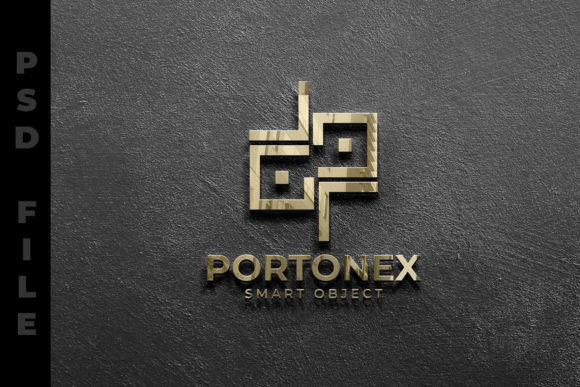
3D Gold Reflection refers to a visual rendering technique that simulates the appearance of gold surfaces with depth, dimensionality, and realistic light interaction—going beyond flat metallic textures to convey volume, curvature, and environmental response. Unlike standard gold overlays or 2D gradients, this approach integrates lighting models, surface normals, and reflective behavior to produce results that respond convincingly to virtual or real-world illumination. It’s commonly used in product visualization, branding assets, UI design elements, packaging mockups, and digital art where premium perception matters—not just as decoration, but as intentional visual communication.
How 3D Gold Reflection Differs from Simpler Metallic Effects
Many designers start with basic gold swatches, linear gradients, or even pre-made Photoshop layer styles labeled “gold.” These can look polished at a glance but often fall short under scrutiny: they lack consistent highlights, fail to follow surface contours, and don’t shift realistically when viewed from different angles. In contrast, 3D Gold Reflection is built on geometric understanding—whether through polygonal modeling, displacement mapping, or advanced shader logic—that allows light to reflect *off* a shape rather than *onto* a flat plane.
For example, a 3D-rendered gold ring will show a crisp, curved highlight along its outer edge, subtle falloff into shadowed grooves, and soft ambient reflections of surrounding objects—all calculated in relation to the model’s form. A flat gold texture applied to the same ring would flatten those transitions, making the object appear cut out or pasted on.
Where 3D Gold Reflection Adds Value—and Where It Doesn’t
The value of 3D Gold Reflection emerges most clearly in contexts where authenticity, craftsmanship, or perceived quality influence perception. Consider luxury watch brands releasing digital lookbooks: using 3D Gold Reflection for bracelet links helps convey weight, polish, and material integrity—details that support trust and aspiration. Similarly, e-commerce sites for high-end jewelry benefit because shoppers rely heavily on visual cues when they can’t touch or inspect items physically.
But it’s not universally necessary. A mobile app icon, social media banner, or minimalist logo lockup rarely needs that level of fidelity. Here, a carefully crafted 2D gold treatment—using duotones, subtle noise, and strategic highlight placement—can achieve comparable sophistication with far less production time and file overhead. The decision hinges less on “which looks better” and more on “what does the context require?”
Technical Realities and Practical Tradeoffs
Producing authentic 3D Gold Reflection demands more than selecting a preset. It typically involves:
- Accurate base geometry or high-resolution normal maps to define surface variation;
- Physically based rendering (PBR) materials with tuned roughness, metallic, and specular values;
- Controlled lighting environments—including HDRI maps—to generate believable reflections;
- Post-processing considerations like bloom or tone mapping to preserve highlight integrity.
That complexity brings tradeoffs. Rendering time increases significantly compared to flat alternatives. File sizes grow—especially with embedded reflection maps or GLB exports. And iterative adjustments require familiarity with 3D software or collaboration with specialists. For teams without access to Blender, Cinema 4D, or Substance Painter expertise, the learning curve can slow turnaround or raise outsourcing costs.
Conversely, simpler approaches scale more easily across formats. A well-designed SVG with gold gradients and subtle drop shadows works responsively on websites, prints cleanly at any size, and loads instantly. It may not simulate real-world physics—but it communicates “premium” efficiently, reliably, and accessibly.
Comparing Use Cases: When Fit Matters More Than Fidelity
Think of 3D Gold Reflection not as a universal upgrade, but as a contextual tool—one that aligns best when three conditions converge:
- Intent matters: You’re aiming to evoke tangible luxury, precision engineering, or artisanal detail—not just add visual interest.
- Medium supports depth: Your output format preserves lighting nuance—such as interactive web experiences, AR previews, high-res print collateral, or video animations.
- Audience expects realism: Viewers are likely to scrutinize details—e.g., buyers comparing fine jewelry online, investors reviewing product prototypes, or press evaluating brand launches.
In those cases, 3D Gold Reflection strengthens credibility. But if your goal is speed, consistency, or broad compatibility—like generating dozens of social thumbnails weekly or building a lightweight SaaS dashboard—the same effect may dilute impact while increasing friction.
Realistic Alternatives Worth Considering
Not all alternatives are compromises—some are smarter fits. Here’s how other approaches stack up depending on need:
- Layered 2D gold treatments: Combine a base gold tone with hand-placed highlights, micro-textures (like fine grain or brushed directionality), and soft ambient shadows. Used thoughtfully, this mimics depth perception without true 3D geometry—and remains fully editable in vector or raster editors.
- Hybrid techniques: Apply 3D Gold Reflection only to hero elements (e.g., a central product shot), while supporting graphics use simplified gold accents. This balances impact with practicality.
- Animated gold effects: Subtle shimmer or rotation-based reflection shifts in CSS or Lottie can imply dynamism and richness—especially effective in digital ads or landing pages where motion draws attention.
- Material-focused photography: For physical products, a well-lit studio shoot with gold-reflective backdrops and polarized lighting often conveys more authenticity than even high-end 3D rendering—particularly when texture, weight, and wear patterns matter.
Decision Factors Beyond Aesthetics
Before committing to 3D Gold Reflection, consider these non-visual factors:
Workflow integration: Does your team have pipelines for updating 3D assets? Can variants (e.g., rose gold, matte gold) be generated programmatically—or do each require manual re-rendering?
Accessibility implications: Highly reflective gold elements can reduce contrast against light backgrounds, affecting readability. Test luminance ratios early—not just for compliance, but for real-world legibility.
Long-term maintainability: A 3D scene built in proprietary software may become difficult to update years later if licenses expire or staff turnover occurs. Open formats like glTF help, but documentation and asset organization remain critical.
Budget and timeline: One hour of skilled 3D work may cost more than a full day of refined 2D execution—but if that hour delivers higher conversion, fewer returns, or stronger press engagement, the ROI shifts meaningfully.
Final Perspective: Matching Method to Meaning
3D Gold Reflection isn’t about technical superiority—it’s about alignment. It excels when the message is “this is meticulously made, precisely finished, and worthy of close inspection.” It falters when applied without purpose, layered over cluttered layouts, or forced into contexts where clarity, speed, or accessibility take priority.
Experienced designers and marketers don’t ask “Should I use 3D Gold Reflection?” They ask “What experience am I trying to enable—and what method serves that most honestly?” Sometimes the answer is a photorealistic render. Other times, it’s a single well-chosen gold stroke in Illustrator—sharp, confident, and exactly enough.
If you're evaluating options now, start by auditing your current assets: Where do viewers linger? Where do they scroll past? Where do competitors lean into realism—and where do they succeed with restraint? That analysis—not trend reports or plugin demos—will point you toward the right choice.