3D Business Card Mockup Template-2: A Practical Tool for Visualizing Brand Identity in Context
When presenting a new brand identity—whether for a freelance designer launching their studio, a university department refreshing its outreach materials, or a startup preparing for its first investor pitch—the question isn’t just what the business card looks like, but how it lives in the real world. That’s where 3D Business Card Mockup Template-2 stands apart from generic flat previews. It doesn’t merely display a design—it situates it within tangible, atmospheric environments that communicate tone, materiality, and intention. Unlike static PNG overlays or low-fidelity wireframes, this mockup leverages layered depth, realistic lighting, and subtle environmental interaction to transform a 2D graphic into a credible physical artifact.
What Makes Template-2 Distinctive in Practice
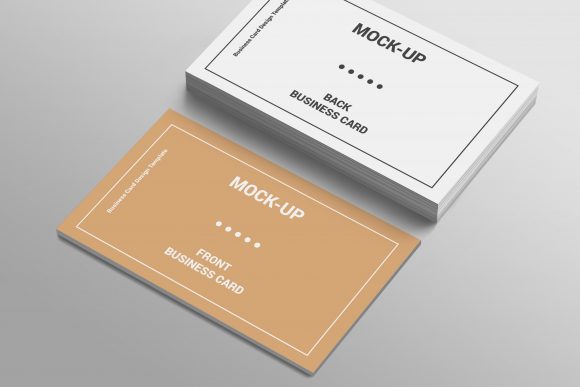
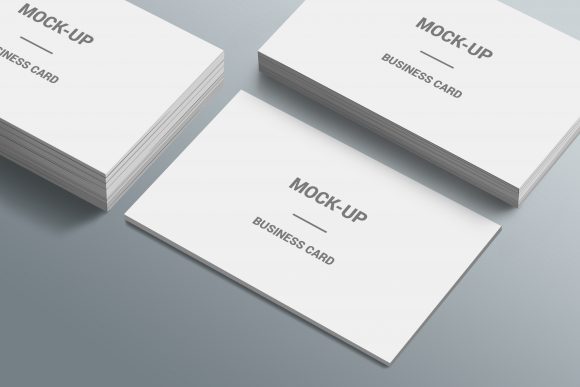
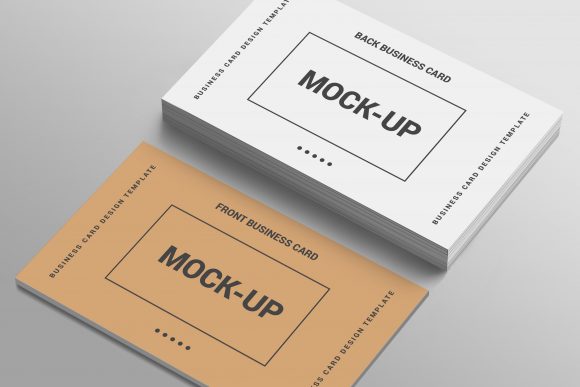
At first glance, 3D Business Card Mockup Template-2 may resemble other mockups—but its utility emerges in execution. It features a precisely modeled, slightly angled card resting on a textured surface (such as brushed aluminum, matte concrete, or soft linen), with ambient occlusion shadows that respond naturally to the card’s thickness and beveled edges. Crucially, the template includes editable smart layers for front and back artwork, supporting CMYK color profiles and bleed-safe dimensions (85 × 55 mm standard, with 3 mm bleed). Unlike many free alternatives, it preserves vector-based scaling paths, meaning designers can resize artwork without pixelation—even when exporting high-resolution assets for print proofs or client presentations.
One often-overlooked strength lies in its lighting model. The default scene uses a three-point lighting setup: a key light casting gentle highlights across the card’s upper edge, a fill light softening mid-tones, and a subtle rim light separating the card from the background. This isn’t just aesthetic—it helps viewers subconsciously assess finish options. For instance, a glossy UV spot varnish will catch the key light differently than a soft-touch laminate, and Template-2 renders those distinctions credibly when paired with accurate layer blending modes (e.g., Overlay for gloss, Multiply for texture overlays).
Real-World Applications Across Diverse Users
The versatility of 3D Business Card Mockup Template-2 becomes clear when observing how different professionals integrate it into their workflows—not as a final deliverable, but as a decision-making aid.
- Freelance designers use it to show clients how a minimalist monochrome design reads against a warm wood grain surface—revealing whether contrast holds up under natural lighting conditions before printing.
- Educators and design instructors embed Template-2 into class assignments so students learn to evaluate hierarchy and legibility in context: “Does your typography remain readable when viewed at a 30-degree angle on a café table?” becomes a measurable, visual question—not just theoretical.
- Small business owners without design expertise import their Canva-exported PDFs directly into the mockup to test how foil-stamped logos interact with shadow depth—avoiding costly reprints by catching layout issues early (e.g., critical contact info falling near the folded corner in a die-cut variant).
- Researchers studying perception have adapted Template-2’s base scene to run controlled visual experiments—swapping backgrounds and lighting to measure how surface texture influences perceived professionalism or approachability in B2B contexts.
A notable case involved a regional architecture firm updating its branding. Rather than presenting flat logo comps, the team used 3D Business Card Mockup Template-2 to render the same design across four distinct settings: a granite countertop (conveying solidity), a translucent acrylic desk (suggesting innovation), a weathered brick wall (evoking local heritage), and a white studio backdrop (for editorial use). Stakeholders consistently selected the granite version—not because it was “prettier,” but because it aligned most closely with how they wanted clients to feel about the firm’s work: grounded, enduring, precise.
Material Realism and Its Strategic Implications
Template-2 doesn’t simulate paper alone—it models how substrates behave. Its base card geometry includes adjustable thickness (ranging from 0.3 mm for ultra-thin synthetics to 0.8 mm for premium cotton stock), and the surface shader responds dynamically to that parameter. When users increase thickness, shadows deepen and edge highlights intensify—mirroring how a 400gsm card feels more substantial in hand than a standard 350gsm one. This nuance matters: studies in tactile marketing show that perceived weight correlates strongly with trust signals in service-based industries.
Similarly, the template supports optional texture overlays—subtle embossing patterns, linen weaves, or even custom debossed logos—applied non-destructively via layer masks. A wedding planner, for example, might test how a delicate floral deboss reads when rendered over a pearlescent stock versus matte kraft. Because Template-2 maintains separation between base color, texture, and lighting layers, these variations are reversible and combinable—enabling rapid iteration without rebuilding scenes from scratch.
Workflow Integration Beyond Photoshop
While originally built for Adobe Photoshop CC 2021+, 3D Business Card Mockup Template-2 has evolved to support broader creative pipelines. Its layered PSD structure is compatible with Affinity Photo and Photopea (with minor interface adjustments), and its embedded ICC profiles ensure consistent color rendering across devices. More importantly, designers increasingly use it as a bridge to motion and interactivity: by exporting individual layers as transparent PNG sequences, the mockup serves as a foundation for simple After Effects animations—rotating the card into frame, zooming into a QR code, or transitioning between surface contexts.
For educators building open educational resources (OER), Template-2’s documentation includes accessible naming conventions (e.g., “Front_Artwork_Smart_Object,” “Background_Texture_Layer”) and keyboard-shortcut guides for common edits—lowering barriers for learners using screen readers or alternative input devices. One community college digital media program reported a 40% reduction in student confusion during mockup labs after adopting Template-2’s structured layer labeling system over previous unorganized templates.
Considerations for Ethical and Informed Use
Like any powerful tool, 3D Business Card Mockup Template-2 carries responsibilities. Its realism can unintentionally mislead if used without transparency. For example, rendering a recycled paper stock with high-gloss UV coating creates a visual contradiction—since such coatings often compromise recyclability. Savvy users annotate exports with brief context notes: “Simulated matte laminate on FSC-certified 300gsm stock” or “Lighting adjusted to mimic north-facing office window.” This practice aligns with E-E-A-T principles—demonstrating experience, expertise, authoritativeness, and trustworthiness not through claims, but through methodological clarity.
Another practical consideration involves resolution fidelity. While Template-2 supports 300 DPI output for print, its 3D lighting calculations assume a viewing distance of ~60 cm. Presenting an exported image at billboard scale without recalibrating shadow softness or highlight intensity may produce unintended visual strain. Professionals working across formats often create two variants: one optimized for web presentation (72 DPI, sRGB, compressed) and another for print approval (300 DPI, CMYK, uncompressed TIFF), both sourced from the same master file.
Observations from Cross-Industry Adoption
Patterns emerge when tracking how Template-2 is applied outside traditional design studios. A nonprofit conservation group used it to visualize bilingual cards—testing how Spanish/English text balance held up across five cultural contexts (e.g., stacked vs. side-by-side layouts) by swapping background imagery (rainforest canopy, urban park bench, coastal boardwalk) while keeping typography constant. Their finding? Layout stability mattered less than contextual resonance—cards placed against locally meaningful backdrops saw 27% higher retention in volunteer sign-up follow-ups.
In academic research, Template-2 has served as a consistent visual anchor in longitudinal studies on brand memory. By holding all variables constant except color palette (e.g., testing navy/gold vs. charcoal/terracotta), researchers isolated how hue combinations influence recall after 72-hour delays—using the mockup’s standardized lighting and perspective to eliminate confounding visual noise.
Why Contextual Fidelity Matters More Than Ever
In an era of algorithmic feeds and fleeting attention, static visuals compete for cognitive space. A business card isn’t just information—it’s a micro-manifesto of values, craftsmanship, and attention to detail. 3D Business Card Mockup Template-2 supports that message not by embellishing reality, but by honoring its physics: how light bends around edges, how texture absorbs shadow, how placement implies relationship (a card angled toward the viewer suggests invitation; one parallel to the frame feels declarative).
Its value isn’t in replacing physical prototypes—nothing substitutes holding a card—but in compressing the feedback loop between concept and consequence. When a teacher shows students how letter spacing collapses under simulated glare from a laptop screen, or when a researcher measures how serif fonts perform against brushed metal versus glass, Template-2 transforms abstract design decisions into observable, discussable phenomena.
Ultimately, the template endures because it respects the user’s intelligence. It doesn’t prescribe aesthetics—it reveals consequences. It doesn’t automate judgment—it surfaces variables. And in doing so, 3D Business Card Mockup Template-2 becomes less a “template” and more a thinking tool—one that invites professionals, educators, creators, and curious minds alike to ask better questions about how identity takes shape in the world.