3D Wood Plate Logo Mockup: When Natural Texture Meets Professional Presentation
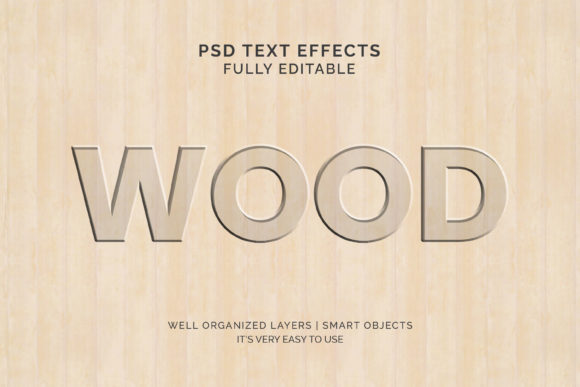
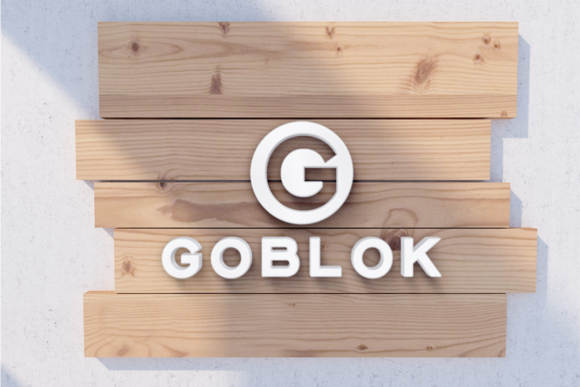
A 3d Wood Plate Logo Mockup is a digital design template that renders a logo or brand mark as if it’s physically engraved, burned, or mounted onto a realistic wooden surface—complete with grain, depth, lighting, and subtle surface variation. Unlike flat PNGs or generic layered PSDs, it simulates three-dimensional form: the slight recess of laser-etched text, the gentle curve of a rounded plate edge, or the warm tonal shift where light catches raised lettering. It’s not just visual styling—it’s context-driven presentation, designed to help designers, marketers, and small business owners show how a logo might appear on real-world physical applications like signage, packaging inserts, artisanal product tags, or boutique storefront displays.
What Sets It Apart From Other Mockup Categories
Not all mockups serve the same purpose—or deliver the same credibility. A 3d Wood Plate Logo Mockup sits at a specific intersection: material authenticity, dimensional realism, and intentional minimalism. Compare it to alternatives:
- Flat or Isometric Surface Mockups: These often place logos on smooth, uniform surfaces (e.g., white acrylic, brushed metal). They’re clean and versatile but lack organic nuance—no visible grain, no tactile suggestion, no warmth. A wood plate mockup introduces texture as a deliberate brand signal: craftsmanship, sustainability, heritage, or hand-finished quality.
- General 3D Object Mockups (like mugs, t-shirts, or business cards): These prioritize shape and placement over material fidelity. While useful for broad concept testing, they rarely simulate how light interacts with porous, fibrous substrates. A 3d Wood Plate Logo Mockup models wood-specific behaviors—how grain direction affects perceived depth, how knots subtly interrupt reflection, how stain absorption varies across grain density.
- Photorealistic Scene Mockups (e.g., a logo on a rustic shelf in a café setting): These excel at environmental storytelling but sacrifice flexibility. You’re locked into a fixed composition, lighting angle, and background context. A dedicated wood plate mockup gives you full control over logo positioning, rotation, scale, and lighting intensity—without needing to edit complex scene layers.
Practical Strengths—and Where It Has Limits
The value of a 3d Wood Plate Logo Mockup emerges most clearly in specific use cases. Its strengths include:
- Consistent Material Representation: If your brand identity leans into natural materials—think eco-friendly skincare, handmade ceramics, or locally roasted coffee—a wood plate mockup reinforces that message without requiring custom photography or 3D modeling expertise.
- Time-Saving Realism: Generating convincing wood grain and depth manually in Photoshop or Illustrator demands advanced layer masking, displacement mapping, and lighting simulation. A well-built 3d Wood Plate Logo Mockup handles those variables automatically via smart object layers or parametric controls.
- Cross-Format Adaptability: Most high-quality versions support multiple wood types (walnut, oak, pine, reclaimed barn wood), finish options (raw, oiled, stained, charred), and plate shapes (round, oval, rectangular, irregular). That means one mockup can serve several client presentations or internal mood boards.
However, it’s not universally optimal. Limitations matter just as much as benefits:
- No Substrate Flexibility: This mockup assumes wood—not metal, stone, leather, or ceramic. If your final application involves engraving on stainless steel signage or embossing on leather goods, a wood plate version may misrepresent contrast, reflectivity, or durability cues.
- Lighting Constraints: Even advanced mockups rely on pre-baked lighting setups. Rotating a logo beyond the intended axis or changing ambient color temperature can break realism. For highly dynamic presentations (e.g., AR previews or interactive web demos), native 3D tools like Blender or Adobe Substance 3D may offer more responsive control.
- Scale Sensitivity: Wood grain behaves differently at different sizes. A mockup optimized for a 4-inch tabletop plaque won’t translate convincingly to a 24-inch wall-mounted sign without re-evaluating grain resolution and shadow softness—something many templates don’t accommodate natively.
Fitting the Right Tool to the Right Need
Choosing whether a 3d Wood Plate Logo Mockup fits your workflow depends less on “is it good?” and more on “what are you trying to communicate—and to whom?”
It shines when:
- You’re presenting to clients whose values align with organic, tactile branding—such as craft breweries, sustainable fashion labels, or wellness studios—and need visuals that feel grounded, not generic.
- Your team lacks 3D rendering capacity but still needs to move beyond flat comps for pitch decks or investor briefings.
- You’re developing a cohesive brand system and want to test how logo treatments hold up across physical touchpoints—not just digital screens.
It’s less ideal when:
- You’re designing for industrial or technical contexts—say, medical device labeling or aerospace component identification—where precision, legibility under glare, or regulatory compliance outweigh aesthetic warmth.
- Your audience expects photorealistic, context-rich imagery (e.g., e-commerce thumbnails showing a logo on an actual product in situ), and you need backgrounds, props, and lifestyle integration baked in—not just a standalone plate.
- You require precise control over physical properties—like exact bevel depth (0.8mm vs. 1.2mm), grain alignment relative to text flow, or simulated weathering—for manufacturing handoff.
How It Compares in Real-World Workflows
Consider two common scenarios:
Scenario 1: A freelance designer preparing a brand identity package for a local woodworking studio. Here, a 3d Wood Plate Logo Mockup isn’t just appropriate—it’s resonant. Using a walnut-textured variant with subtle burn marks reinforces the client’s core offering. The designer swaps in the logo, adjusts lighting to emphasize grain contrast, and exports variations for signage, website headers, and social bios—all within minutes. No stock photo search, no custom 3D setup, no mismatched textures.
Scenario 2: A marketing manager at a tech startup launching a new SaaS dashboard. In this case, a wood plate mockup feels incongruous—even if used tastefully. Users expect clarity, scalability, and digital-native cues. A sleek glass UI mockup or minimalist dark-mode interface preview would communicate functionality and modernity more directly. Introducing wood texture here risks diluting messaging or appearing stylistically inconsistent.
Making the Call: Evaluation Over Assumption
There’s no universal “best” mockup—only the most appropriate one for a given goal, audience, and medium. A 3d Wood Plate Logo Mockup earns its place when material storytelling matters as much as typographic hierarchy or color contrast. It bridges the gap between abstract design and tangible experience, helping stakeholders visualize not just what a logo looks like—but what it feels like to encounter it in the physical world.
That said, always ask: Does this mockup clarify—or distract? Does it align with the brand’s voice and operational reality? Can it scale across formats without losing fidelity? If the answer to those questions is consistently yes, then a 3d Wood Plate Logo Mockup is likely a practical, efficient, and expressive tool for your current project. If not, it’s worth pausing to explore alternatives—not because one is inherently superior, but because fit determines function.
Ultimately, the strongest decisions come from matching method to meaning—not chasing realism for its own sake, but using tools like the 3d Wood Plate Logo Mockup with intention, awareness, and respect for both audience expectations and design constraints.